How targeted coaching improves safety, decision-making, and performance—for pilots, CFIs, and flight schools
By Brandon Williams, Aviation Safety & Human Factors Speaker • Airline Captain • Former USAF Fighter Pilot • Aviation Safety & Human Factors Professor
Aviation has never lacked regulations, procedures, or technical guidance. What it often lacks—especially in general aviation and flight training—is structured support for how humans actually make decisions, communicate, and learn under pressure.
That gap is where aviation consulting and coaching add real value.
Unlike traditional training, aviation coaching focuses not on what pilots should do, but on how decisions are formed, how errors develop, and how learning actually occurs in the cockpit and in the debrief. For pilots, CFIs, and flight school leaders, this approach can be transformative—not because it replaces standards, but because it strengthens the human system operating within them.
The Limits of Traditional Training
Most pilots are trained in a highly task-oriented environment. We teach maneuvers, procedures, flows, callouts, and regulations. We evaluate performance against objective standards—and rightly so.
But accident and incident data consistently show that the breakdown rarely occurs at the level of stick-and-rudder skill alone. Instead, the contributing factors often include:
- Mis-prioritization
- Low situational awareness
- Poor risk assessment
- Communication breakdowns
- Normalization of deviance
- Complacency
- Fatigue
- Weak debriefs that fail to surface root causes
These are not deficiencies in motivation or professionalism. They are human factors issues, and they require different tools than another checklist review or extra pattern work.
What Aviation Coaching Actually Is
Aviation coaching is not remedial training, therapy, or “soft skills” instruction. It is a structured, professional approach to improving performance by addressing how pilots and instructors think, decide, communicate, and learn.
Effective aviation coaching focuses on:
- Decision-making under uncertainty
- Situational awareness and perception gaps
- Error management—not error avoidance
- Communication and intent clarity
- Debrief quality and learning effectiveness
- Instructor consistency and judgment development
The goal is not to eliminate error—an impossible task—but to recognize, trap, and learn from it earlier and more effectively. In order to help us humans make better decisions in an environment we’re not designed to operate in…flying.
Why Pilots Benefit from Coaching
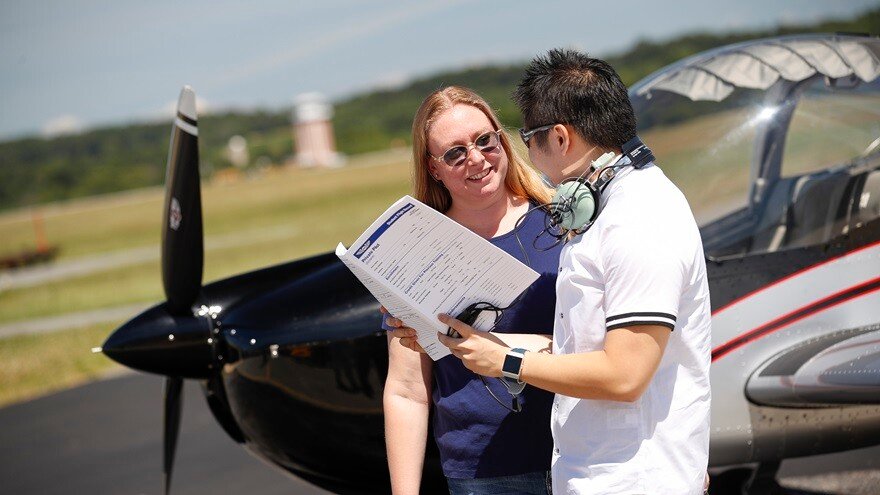
For individual pilots, coaching provides something traditional training often cannot: an external, non-judgmental perspective focused on decision quality rather than outcomes alone.
Pilots benefit by:
- Developing better threat and error management habits
- Learning how small decisions compound over time
- Improving risk assessment in real-world, non-checkride conditions
- Becoming more self-aware of personal biases and tendencies
- Gaining confidence rooted in judgment, not just proficiency
- Improving performance through self-debriefing.
Many experienced pilots are surprised to discover that the biggest performance gains come not from flying more hours, but from thinking differently about the hours they already fly.
Why CFIs and Instructors Need Coaching Too
Flight instructors are often promoted based on technical competence, not instructional skill or debrief effectiveness. Yet instructors shape safety culture more than any written policy ever will.
Coaching helps CFIs:
- Conduct more effective, student-centered debriefs
- Diagnose why a student made a decision—not just what went wrong
- Avoid teaching only “technique” without understanding perception
- Maintain consistency across instructors within a flight school
- Model humility, curiosity, and professional learning
Strong coaching transforms instructors from evaluators into learning facilitators, which improves both safety and student retention.
The Debrief: Where Coaching Delivers the Most Value
The debrief is where aviation coaching pays the greatest dividends.
Too many debriefs default to a list of corrections: “You overshot final,” “Your airspeed control was off,” “You missed this step.” While technically accurate, these statements often fail to uncover the decision-making process that led there.
A coaching-based debrief prioritizes questions such as:
- What did you perceive at the time?
- What were you trying to accomplish?
- What information were you missing or discounting?
- How did workload and task saturation influence the outcome?
When pilots understand their own perception and decision chain, improvement becomes durable—not just compliant.
Benefits at the Flight School and Organizational Level
At the organizational level, aviation consulting and coaching help flight schools and operators move beyond compliance toward true safety culture.
Well-designed consulting engagements can:
- Standardize instructor debrief quality
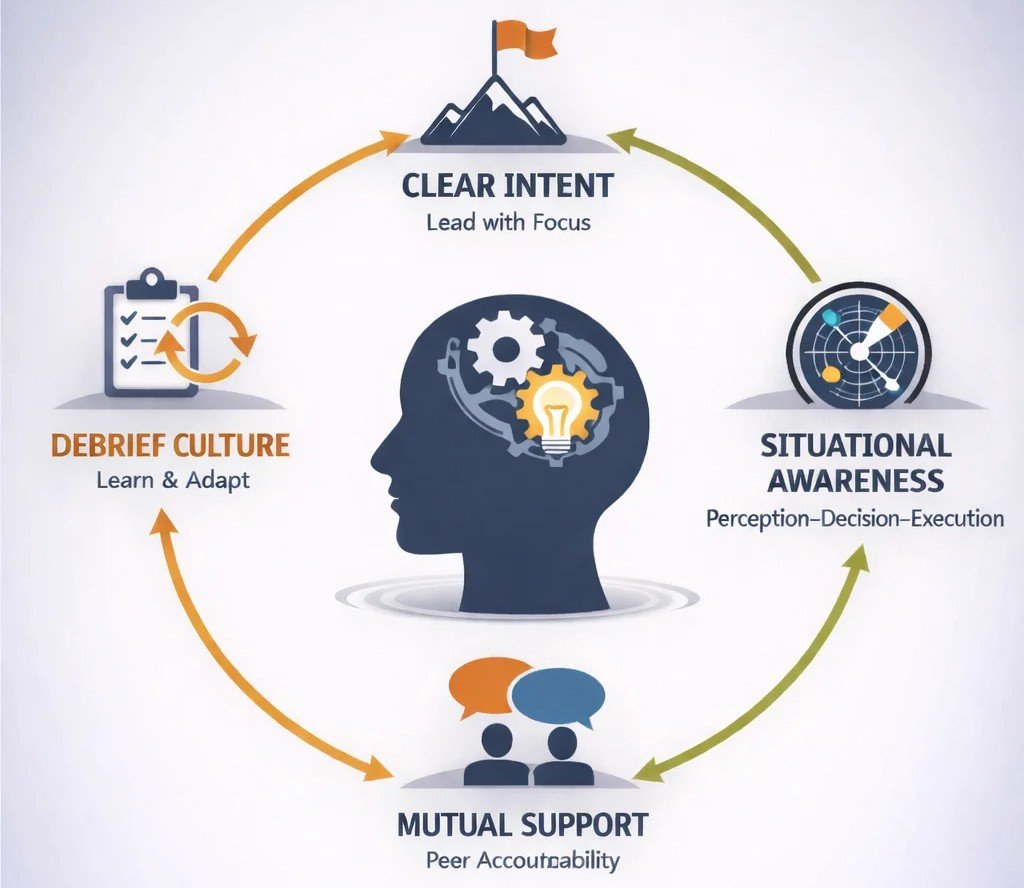
- Improve peer accountability and mutual support
- Strengthen hazard reporting without blame
- Reduce repeat errors and “mystery incidents”
- Align leadership intent with frontline behavior
- PRODUCE BETTER PILOTS
Importantly, coaching creates psychological safety—the condition in which instructors and pilots are willing to speak up early, ask questions, and surface concerns before they become incidents.
Coaching Is Not About Blame—It’s About Learning
One of the most common misconceptions is that coaching is only needed after something goes wrong. In reality, the best organizations use coaching before incidents occur, when performance still appears acceptable on the surface.
Aviation coaching reinforces a critical mindset shift:
We are not here to investigate people—we are here to understand systems, decisions, and conditions.
That shift changes how pilots train, how instructors teach, and how leaders lead.
Just like debriefing our last flight. Aviation coaching serves as a way to have someone else help discover gaps in your decision-making and own improvement processes as a pilot.
The Bottom Line
Aviation consulting and coaching do not replace regulations, checkrides, or technical instruction. They complement them by addressing the human element that ultimately determines safety outcomes.
For pilots, coaching sharpens judgment. For CFIs, it elevates instructional effectiveness. For flight schools and operators, it strengthens culture and ultimately reputation.
In an industry where the margin for error is unforgiving, how we think, decide, and learn matters just as much as what we fly.
www.brandonwilliamsspeaker.com | brandon@brandonwilliamsspeaker.com
Brandon Williams is a highly sought-after keynote speaker, seasoned Airline Captain, Air Force Instructor Pilot, and former U.S. Air Force F-15E Fighter Pilot, Lieutenant Colonel, and Aviation Safety Officer. In addition to travelling around the country speaking to flight schools and other high reliability teams, he teaches at several aviation universities as an aviation safety and human factors professor, and also serves as a Line Check Pilot at a major U.S. airline, where he evaluates, mentors, and standardizes pilot performance in high-consequence operating environments.
With over two decades of experience training, evaluating, and leading aviators across military, airline, and academic aviation, Brandon brings a unique blend of aviation science, human factors, and real-world instructional leadership. His work bridges operational reality with research-backed human performance principles to help instructors move beyond rote task completion and toward professional-grade instruction.
As a human factors and aviation safety expert, Brandon equips instructors and leaders with practical tools to reduce human error, improve decision-making, and reinforce accountability through clear intent, disciplined briefing and debriefing, and ownership without blame—building safer, more consistent, high-reliability training environments.