Most failures don’t start with bad intent.
They start with good people operating in complex, high-pressure systems—with incomplete information, time constraints, competing priorities, and human limitations we rarely talk about openly.
Most failures don’t start with bad intent.
They start with good people operating in complex, high-pressure systems—with incomplete information, time constraints, competing priorities, and human limitations we rarely talk about openly.
That’s not a character flaw. That’s human factors.
The Hidden Risk in High-Performing Teams
In safety-critical environments, experience and confidence can quietly create risk:
- Assumptions replace verification
- Silence replaces challenge
- “We’ve always done it this way” replaces curiosity
- Complacency degrades Situational Awareness
Over time, teams drift—not because they don’t care, but because systems normalize small deviations until something finally breaks.
High-reliability organizations don’t eliminate human error. They design for it.
The Difference Isn’t Experience—It’s How Teams Support Each Other
What separates high-reliability teams from everyone else isn’t talent or technology.
It’s how they:
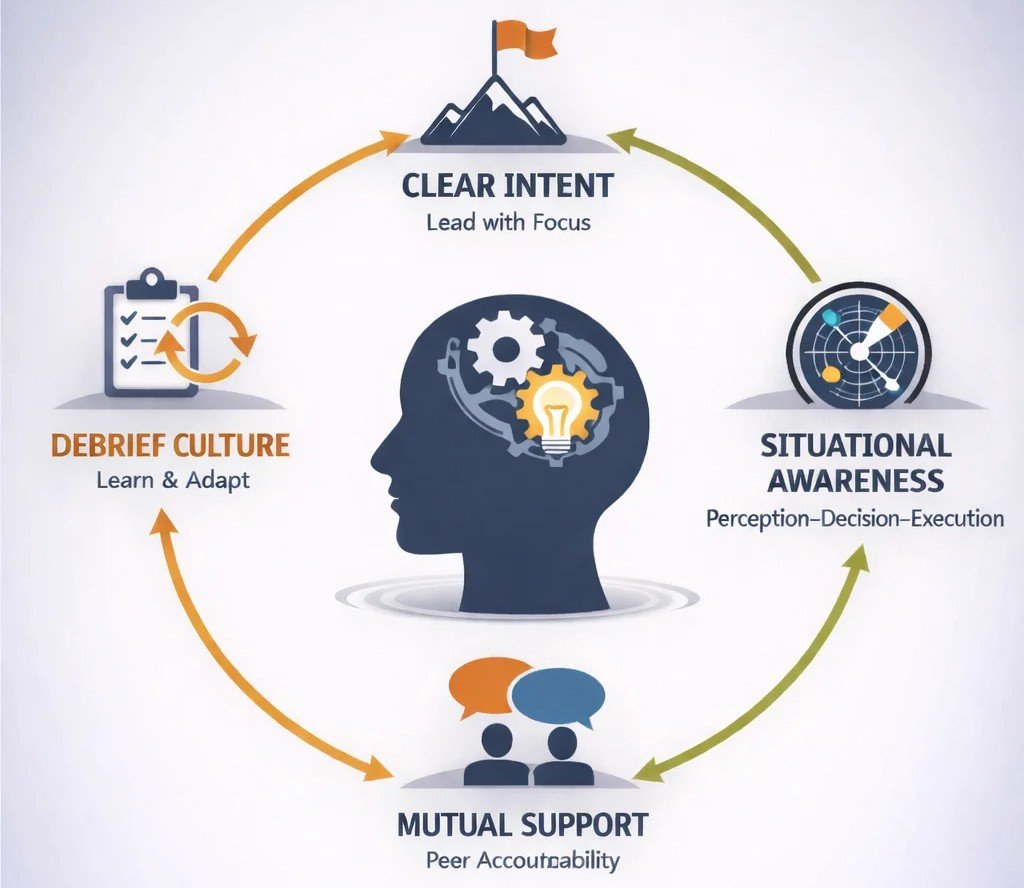
- Build shared situational awareness
- Make decisions under uncertainty
- Communicate clear intent
- Practice mutual support—especially under pressure
- Debrief without blame
Mutual support isn’t about being polite or avoiding conflict. It’s about watching each other’s backs, speaking up early, and stepping in when workload, stress, or complexity start to degrade performance.
High-reliability teams do not “call each other out,” they “call each other up.”
Debriefing: Where Accountability Becomes Collective
Debriefing isn’t about assigning fault after something goes wrong. It’s where accountability becomes shared.
Effective debriefs focus on:
- What actually happened (not what we hoped happened)
- Where mutual support helped—or was missing
- Root Cause: Perception-Decision-Execution
- Human factors and system contributors
- What we’ll do differently together next time
When teams debrief well, they don’t just identify errors—they strengthen trust, clarify expectations, and reinforce peer accountability.
Psychological Safety and Accountability—Through Mutual Support
There’s a false belief that psychological safety means “being nice” and accountability means “calling people out.”
High-reliability teams understand something different:
- Psychological safety allows people to speak up
- Mutual support ensures people step in
- Accountability means peers hold each other to the standard—early and respectfully
The goal isn’t comfort. The goal is reliable performance when it matters most.

The Question That Changes Culture
Not: “Who made the mistake?”
But: “How did our system—and our support for each other—make this outcome possible?”
That question shifts organizations from blame to learning, and from individual responsibility to collective ownership of safety.
If your team works in complexity, uncertainty, or high-stakes environments, the answer isn’t demanding perfection.
It’s building cultures of mutual support, clear accountability, and disciplined learning—before the next incident forces the conversation.
If your organization wants accountability without blame—and support without complacency—I continue this work with safety-critical teams nationwide.
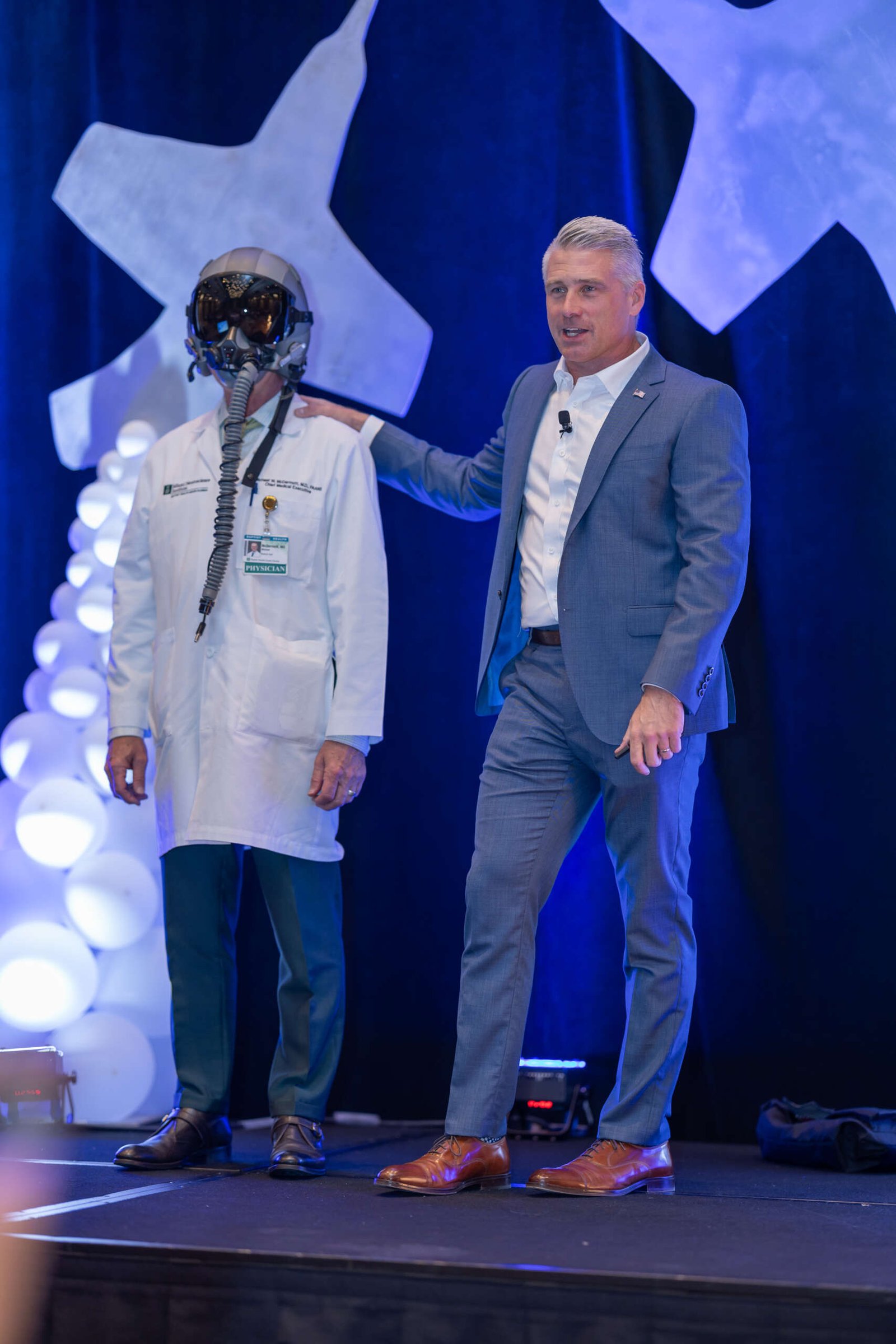
Brandon Williams Safety & Human Factors Leadership Keynote Speaker and Coach Former US Air Force Fighter Pilot | Airline Captain | Human Factors Professor
www.brandonwilliamsspeaker.com | brandon@brandonwilliamsspeaker.com
Brandon Williams is a seasoned airline pilot, human factors professor, and former U.S. Air Force Fighter Pilot, Lieutenant Colonel, and Safety Officer with over two decades of experience leading teams in some of the world’s most dynamic, complex, and high-risk environments.
As a recognized expert in Human Factors and organizational safety, Brandon equips leaders with the tools to build High-Reliability Organizations and High-Performance Teams—including transportation, healthcare, aviation, energy, construction, and manufacturing.
Through powerful keynotes and training grounded in military aviation and safety science, Brandon addresses the realities of human error, the importance of system-level thinking, and how to lead in safety when facing uncertainty and complexity.